
Easter Trading Strategy: Does the Stock Market Rally Before the Holiday?

Today, we look at the easter trading strategy: Does the stock market rally before the holiday?
While Easter is a major religious holiday, its timing has a significant and quantifiable impact on the U.S. stock market, particularly in the days leading up to Good Friday.
Because Good Friday is a federal holiday and markets are closed, the trading week concludes on Holy Thursday, which historically stands out as one of the strongest trading days of the year.
This positive bias is often attributed to a combination of increased investor optimism, lower trading volumes, and specific institutional behaviors typical of holiday periods.
Backtest 1: The Holy Thursday Strategy (Wednesday to Thursday)
The most concentrated performance occurs in the final 24 hours of the trading week.
By using the S&P 500 as a proxy, we can backtest a simple strategy:
Buy at the close of the Wednesday before Holy Thursday and sell at the close on Holy Thursday.
Since 1960, the results for this specific window have been impressive:
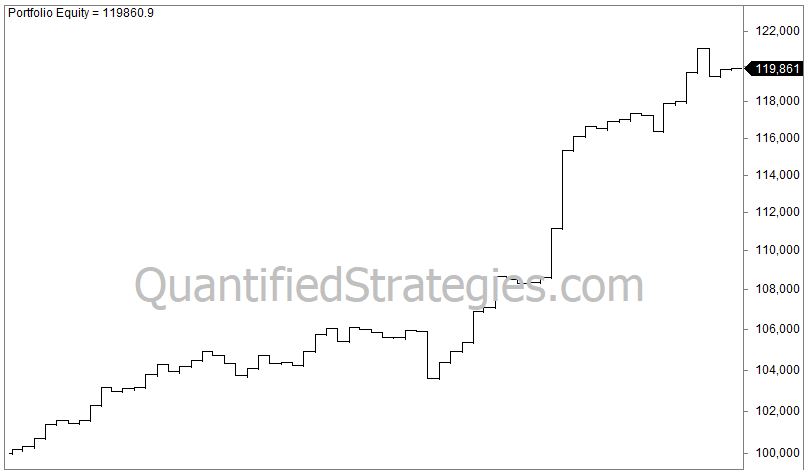
Average Gain per Trade: 0.35%.
Win Rate: 68%.
Profit Factor: 4.1.
Maximum Drawdown: A remarkably low 2%.
Interestingly, if you choose to buy at the Wednesday close but sell at the Holy Thursday open, the average gain drops to 0.25%, suggesting that a significant portion of the rally occurs during the Thursday trading session itself.
Backtest 2: The Easter Holiday Week Performance
If we broaden the horizon to capture the entire week leading up to the holiday, the “Easter Holiday Effect” becomes even more pronounced.
This strategy involves purchasing stocks at the close of the Friday preceding Easter week and selling them at the close of Holy Thursday.
The long-term data for this four-day holding period shows a robust positive trend:
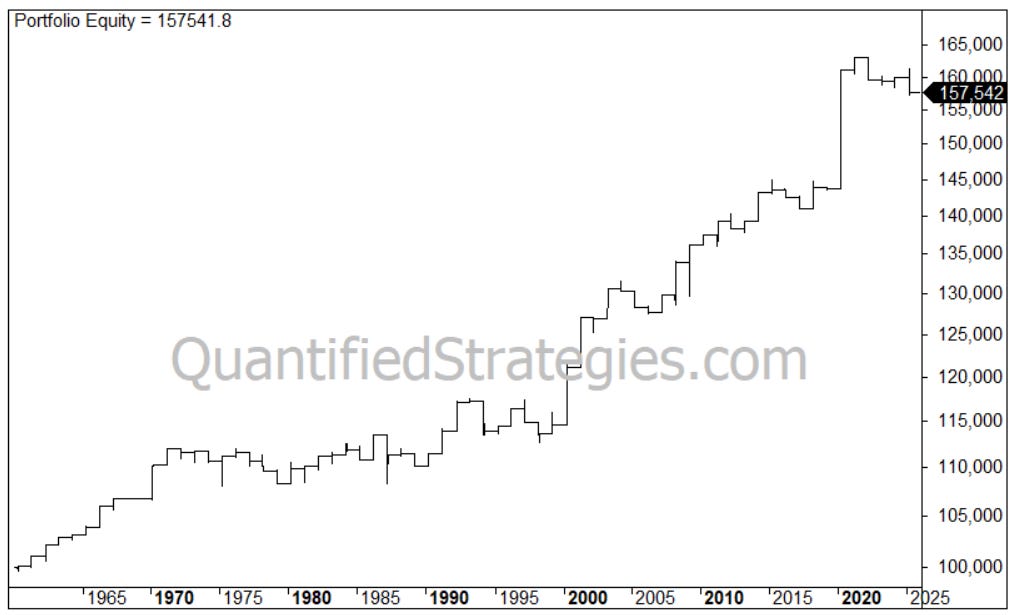
Long-Term Returns (65-year period): An average return of 0.7% per trade.
Recent Performance (Since 2000): The average return has increased to 1.3% per trade, indicating that this seasonal effect may be strengthening in the modern era.
Risk-Reward: Gains during this period typically outweigh losses, contributing to a favorable risk profile.
In contrast, the week following the Easter holiday does not exhibit any consistent patterns, generally performing like any other random week in the market.
Therefore, the tactical edge lies solely in anticipating the holiday.
Thanks for reading. This was all for the Easter Trading Strategy: Does the Stock Market Rally Before the Holiday?
If you prefer visual content, I’ve shared a shorter, visual version of this strategy on Instagram and Facebook.
https://www.instagram.com/reel/DWbW4BZjeTe/?utm_source=ig_web_copy_link&igsh=MzRlODBiNWFlZA==
https://www.facebook.com/share/r/1Fy1viesyM/