
26 Practical Trading Lessons I Wish I Knew Before My First 20 Years in the Market

These Practical Trading Lessons I Wish I Knew Before My First 20 Years in the Market distill the most critical trading lessons I have gathered since my journey began in August 2001.
My path to becoming a full-time trader began in August 2001, sparked by a perfect storm of being laid off after the dot-com bubble and a personal breakup.
Before entering the markets, I earned an MSc from Heriot-Watt University and a business degree from the Norwegian School of Management, followed by two years as an auditor. I also co-founded Aksjeforum.com, one of Norway’s first trading websites, and have authored four books on trading, one of which became a record-breaking bestseller in Norway.
In 2001, I flew to London to sit for the Series 7 exam (the General Securities Representative Qualification Examination), which I passed with flying colors.
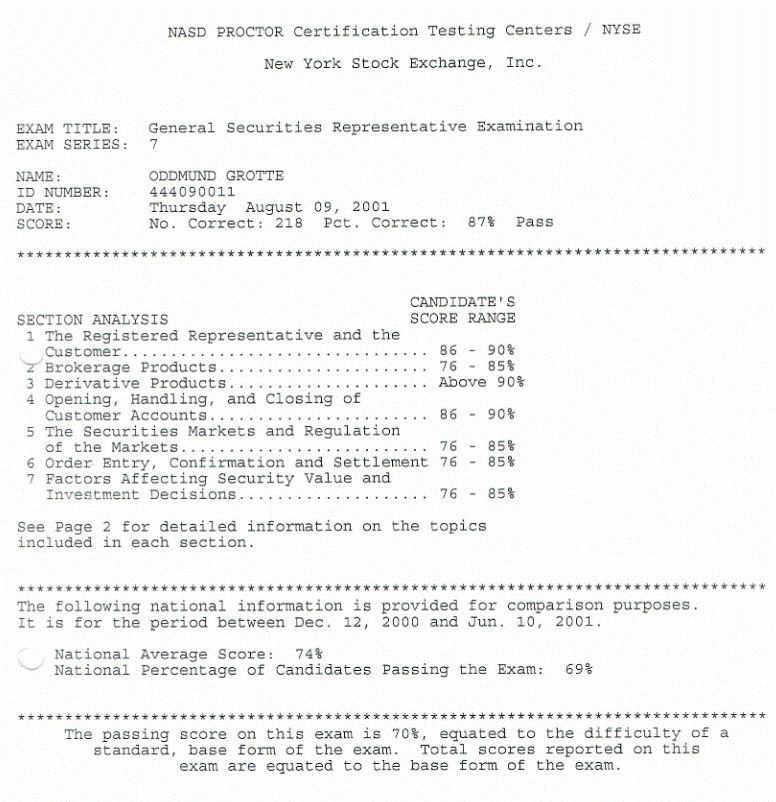
I sought this qualification to trade proprietary with Echotrade, a move that allowed me to access significant leverage and bypass retail margin limits.
I remained an independent prop trader and investor from 2001 until 2018, evolving from a pure day trader to a swing trader and eventually a long-term investor. Today, I operate like a “one-man hedge fund,” agnostic to time frames and trading anything from day trades to decades-long holdings.
The 26 Practical Trading Lessons
Understand Market Ecology: Trading is a zero-sum game; identify if you are the predator or the prey.
Everything is Temporary: Strategies have life cycles; assume they will eventually stop working.
Quantify Everything: Use mechanical trading to remove emotions and rely on the law of large numbers. Small edges compound over time!
Out-of-Sample Backtesting: Paper-trade strategies for months; at least 50% fail this stage.
Trial and Error Over Logic: Hands-on experience is superior to pure reasoning in counterintuitive markets.
Focus on Idea Generation: Research should take up 90% of your time, while trading should take only minutes.
Build a Network: Success is nearly impossible alone; surround yourself with other traders.
Keep Meticulous Records: A trading journal is your best tool for focusing on process over outcome.
Exploit Small Edges: Focus on small, frequent profits based on probabilities rather than “home runs”.
Diversify via Uncorrelated Strategies: A portfolio of strategies that don’t move together is the best defense against drawdowns.
Have a Secondary Income: Trading as a sole income is stressful; a safety valve prevents desperate decisions.
Know Your Risk Tolerance: You won’t know how you’ll react to a major drawdown until you are in the middle of one.
Trade Smaller Than You’d Like: Focus on defense and trade small to maintain detachment from money.
Avoid Comparisons: Don’t compare yourself to others on social media, which is plagued by survivorship bias.
Simplicity Beats Perfection: Avoid over-optimization; a simple, suboptimal strategy is often more robust.
Acknowledge Luck: Randomness plays a massive role; stay humble as luck is a significant part of the puzzle.
Exploit Structural Edges: Look for edges based on market structure, like index rebalancing or market order imbalances.
Stop-Losses Can Fail: Standard stop-losses are often a sure way to lose money; use diversification and position sizing instead.
Walk the Least Crowded Path: There is more durability in boring, lower-volume stocks than in popular instruments.
Stocks are the Best Arena: Equities offer a long-term tailwind from inflation and earnings growth.
Grit Over Intelligence: Persistence and delayed gratification are more valuable than high IQ.
Push Hard During Good Times: Profits are sporadic; trade hard when strategies are working and adapt when they aren’t.
Accept Being Wrong: Losing trades and small drawdowns are simply the cost of doing business.
Learn to Code: Modern backtesting requires programming skills to properly validate strategies.
Think Inversely: Master the “rules of disaster” to avoid them; the best trades are often the ones you don’t do.
Discipline is Meticulous: Trading is a boring, daily routine requiring extreme discipline rather than constant action.
These insights represent a lifetime of learning and adaptation, encapsulated in the 26 Practical Trading Lessons I Wish I Knew Before My First 20 Years in the Market.
Great tips!! Tusen takk!
If you prefer visual content, I’ve shared a shorter, visual version of this strategy on Instagram and Facebook.
https://www.instagram.com/reel/DWOO-kzlN6S/?utm_source=ig_web_copy_link&igsh=MzRlODBiNWFlZA==
https://www.facebook.com/share/v/14XBNPDhKVh/